
If you're reading this, you're likely familiar with the term "subcompact," which in car terms, refers to a small car. What does small mean? What's the official difference is between A- and B-segment vehicles? Subcompacts and compacts? And what is a kei car anyway? Let's start our alphabetical journey on the small end of things.
 KEI CARS (K-CARS)
A kei car (pronounced "kay," an abbreviation of the Japanese word
Keijidosha) is a vehicle class in Japan that falls under a certain weight, size, and engine displacement limit. Owners of kei cars receive a tax benefit from the Japanese government as well as special parking privileges. The kei car came into existence after World War II. It was brought about promote the growth of the country's automotive industry in a time where many couldn't afford a car. But the kei car was more practical than a motorcycle and offered an incentive to get people into cars.
There have been various kei size, weight, and engine displacement regulations over the years. Currently, the vehicles must be no longer than 11.4 ft. (3.4m), no wider than 4.86 ft. (1.48m), have a maximum height of 6.56 ft. (2m), possess a maximum engine displacement of 660ccs (40.3 cubic inches), and have no more than 63 hp.
There are kei cars in the U.S., however, most are for off-road use only. Most can be seen on college campuses hauling supplies or dirt for grounds work. Recently, kei vehicles have gained popularity on farms and ranches as a substitute for Side X Sides (e.g. Yamaha Mule, Polaris Ranger, etc.), since kei cars have enclosed cabs, can be had with true four-wheel drive systems, and have heaters.
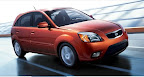 DEFINING CARS BY SEGMENT
When talking vehicle size, all cars fall into certain segments. These are often described by a letter in the alphabet—the later in the alphabet, the larger the vehicle. From time to time, these segments are also referred to as other names. A-segments cars are often referred to as microcars; B-segments vehicles are usually known as subcompacts; C-segments are usually synonymous with compact cars, and D-segments as mid-size, etc., etc. For example:
A-segment/Microcar:Ford Ka, Toyota/Scion iQ, Smart ForTwo, Fiat 500
B-segment/Subcompact: Ford Fiesta, Toyota Yaris, Honda Fit, Chevrolet Aveo, MINI Cooper
C-segment/Compact: Ford Focus, Toyota Corolla, Honda Civic, Chevrolet Cobalt, Volkswagen Jetta
D-segment/Mid-Size: Ford Fusion, Toyota Camry, Honda Accord, Chevrolet Malibu, Volkswagen Passat
E-segment/Full-Size:Ford Taurus, Toyota Avalon, Acura TL, Chevrolet Impala, Chrysler 300C
OFFICIAL CLASSIFICATION: THE EPAMost of the above size classification is common sense, as there isn't a steadfast rule to which segment a car must be placed based on exterior size. There is, however, an official class size designator for all cars sold in the U.S., but it's based on interior and cargo volume, and is regulated by the Environmental Protection Agency (EPA). However, the EPA's classifications, which use interior volume, don't always seem to make sense.

 BLURRED CLASS DIVISIONS
As vehicle styles and shapes change, the lines between car classes have become increasingly blurred, especially with automakers' ability to increase interior size, yet keep exterior packaging small. This is where things can become convoluted.
Take the 2010 Nissan Versa, for example. Dimensionally, it seems to fit the B-segment/subcompact class. However, the EPA classifies it as a mid-size car due to interior volume. Another example is the 2010 Dodge Challenger: The EPA says it's a compact. Clearly, if you park a Versa next to a Challenger, you'll see they are
not the same size. In fact, they're not even close. The Versa is 169.1" long; the Challenger is 197" long.
Quick tangent: As you can see in the chart above, what's the operational definition of "station wagon?" With the stunning amount of crossovers today, are those SUVs or station wagons? I digress ...
Anyway, my assumption is that the EPA's designators relate more to fuel economy purposes than exterior dimensions, but they're still unintuitive to me.
 MAKING SENSE OF IT ALL
Now that I've probably made this more confusing than it ought to be, let's step back a moment. Most people just look at a car and decide whether it's a subcompact or a full-size, etc., by its exterior. Few people are going to argue about whether a Versa is a mid-size car or not—it's still pretty small on the outside.
FYI, one guideline I tend to use (at least for subcompacts) is a vehicle's wheelbase. If it's under 100", then I typically say it's a subcompact. Of course, then there's the Nissan Versa again with 102.4 inches between the wheels. However, with car size classification, there always seems to be an exception to the rule.
Unless you're the EPA, it's a common sense thing. Obviously a Yaris is smaller than a Corolla, but bigger than a Scion/Toyota iQ, so the Yaris seems to easily slot into the B-segment. The Accord is still larger than a Civic, so the Accord is going to be the D-segment vehicle.
Unlike most machines these days, cars keep getting larger and larger. Many of today's subcompacts could have been considered compacts or maybe even mid-sized vehicles in the 1980s. But with the requirement for increased safety equipment, the demand for abundant standard equipment, and the desire to have more refined cars, the increase in vehicle sizes (especially in "small" cars) was bound to happen. Now we just need to figure out which classes to put everything in.
LINKFuelEconomy.gov (EPA)

 I'm not much of a gamer, per se. However, I have owned all of the Gran Turismo games (minus Prologue). Gran Turismo 5 has been announced for a November release and I think I'm going to have bite the bullet and get a Playstation 3. The above is a screen shot from the game. Wow.


.jpg)


